Making the Case for Trust in Reporting Across Kansas, Texas and Tennessee

David Sommers

CFINR Executive Director delivers keynote to three state press associations

The Center for Integrity in News Reporting took its message of objective journalism to three state press associations in June, with Executive Director Rufus Friday telling publishers, editors and journalists in Kansas, Texas and Tennessee that public trust in the news media sits at a 50-year low and that winning it back requires “will, not a budget.”


Friday delivered the same keynote, “Trust in Reporting: It’s Not an Option,” at the Kansas Press Association’s convention in Hutchinson on June 5, the Texas Press Association’s 146th annual convention on June 19 and the Tennessee Press Association’s summer conference in Franklin on June 25. In Texas and Tennessee, he closed the appearances by surprising Sally Sexton of the Weatherford Democrat in Texas and Drew Wheeler of the McNairy County News in Tennessee with the first CFINR awards presented in their states, two of the half-dozen $5,000 state awards the Center has presented this summer.


The numbers he carried to every stop

The case rests on data Friday returned to in all three states. Gallup polling that measured trust in the media at 72% in 1976 put it at 28% in September 2025, and 34% of Americans now say they have no trust in the media at all, the first time in the poll’s history that complete distrust outweighs any trust. The news media has passed Congress as the country’s least-trusted institution. And when the Reuters Institute asked 92,000 people across 46 countries whether they trust their national news media, the United States ranked last, at 29%.


“I share these numbers not to depress you,” Friday said in Hutchinson. “I share them because the scale of the problem determines the size of the response we need. And the response we need is not incremental.”


Friday traced the erosion to four causes: readers’ pull toward information that confirms what they already believe, and newsrooms that blurred the line between news and opinion; the economics of 24/7 cable and social media, which reward speed, outrage and commentary over verification; the replacement of trained journalists by influencers as local beats disappear; and a debate inside journalism itself over whether objectivity is worth defending.


He took on the last cause directly at each stop, citing “Beyond Objectivity,” the 2023 Arizona State report in which a majority of 75 editors surveyed argued for moving away from objectivity in news reporting. Friday called some of the frustrations behind the report legitimate, naming false balance and thin coverage of communities of color, working-class communities and rural communities. Then he drew the line, quoting former Washington Post editor Marty Baron: “We want objective judges, objective doctors, objective scientists. It’s natural to expect objective journalists too.”


“The profession doesn’t need to abandon the standard,” Friday said in Kansas. “It needs to live up to it.”


Three states, three hometown giants

At each stop, Friday grounded the argument in the state’s own journalism history. In Kansas, it was William Allen White, the Emporia Gazette editor arrested in 1922 over a sign supporting striking railroad workers, whose Pulitzer Prize-winning reply, “To an Anxious Friend,” warned that “only in time of stress is freedom of utterance in danger.” Both sides of that strike, Friday noted, stayed peaceful in Emporia because both felt the Gazette had covered them fairly.


In Texas, it was Walter Cronkite, the Houston paperboy who became the most trusted man in the country, Friday said, “not because he told people what to think,” but “because they believed he was telling them what happened.” In Tennessee, it was Adolph Ochs, the Knoxville paperboy who went on to buy The New York Times and promised readers the news “impartially, without fear or favor, regardless of any party,” and John Seigenthaler of The Tennessean, who founded the First Amendment Center after 43 years at the paper.


The prescription: draw the line publicly

Friday’s prescription was the same in all three states: adopt a statement of core journalistic values, publish it where readers see it every day and make the separation between news and opinion impossible to miss. He pointed to the Bangor Daily News, which tells readers, “Our only agenda is the truth,” and to the mural Stars and Stripes staff painted at Camp Humphreys in South Korea, five words reading “Credibility. Impartiality. Truth-telling. Balance. Accountability.” When the Pentagon later proposed generating a large share of the paper’s content itself, said Friday, who chairs the Stars and Stripes National Publisher Advisory Board, the staff “had already drawn the line. In writing. Publicly.”


“Your readers cannot see your internal standards,” he told the Texas audience. “They can only see what you publish.”


A first look at CFINR’s own data

In Hutchinson, Friday previewed the Center’s first original research, a YouGov survey of 2,000 American adults released the following week. Measuring 11 major national news organizations, the survey found only two, ABC News at 53% and NBC News at 51%, trusted by a majority of Americans. On average, just 13% of Americans said those outlets always make a clear distinction between news and opinion; 16% said they never do. Asked what kind of reporting they prefer, 53% chose reporting that tells them what was said and lets them decide what is true, while 47% wanted reporting that says whether a statement is true or false. Republicans preferred the neutral style, 65%; Democrats the interpretive style, 56%.


“The same editorial choice that builds trust with one half of the country erodes it with the other,” Friday said in Texas. “And the data points one way. Neutral, factual, let-the-reader-decide reporting is the approach most likely to rebuild trust across the whole spectrum.”
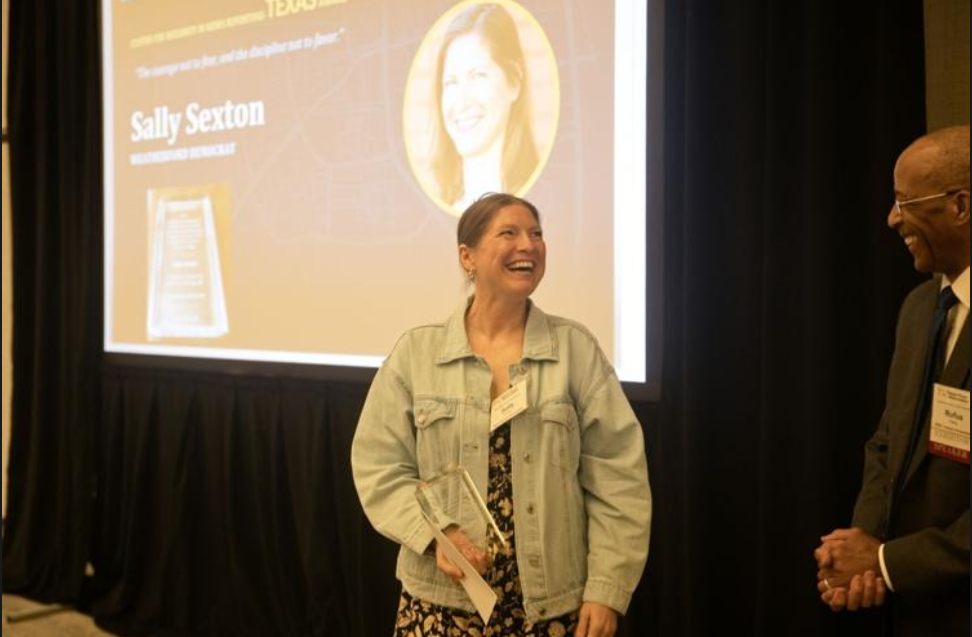
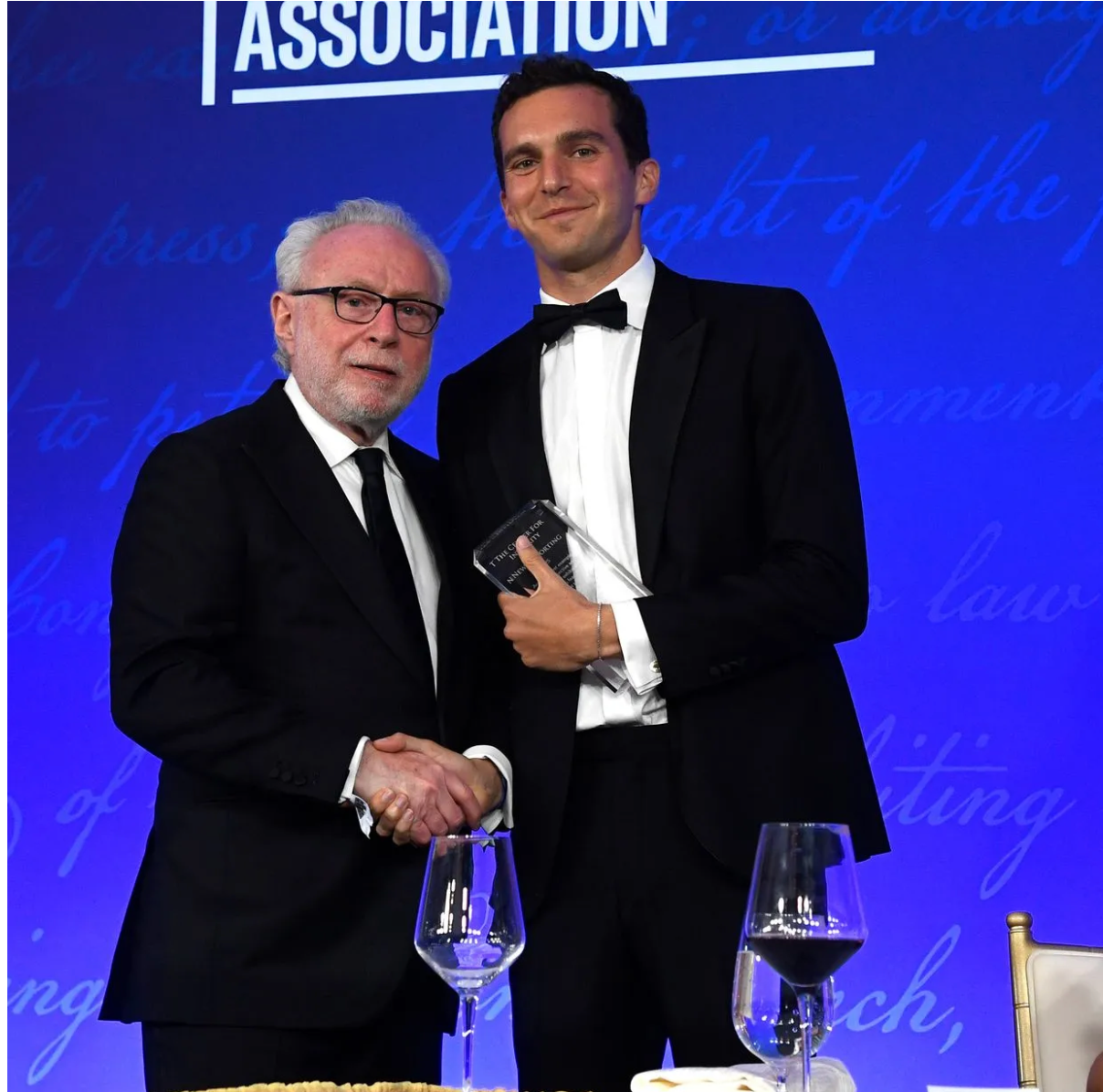
CFINR Executive Director Rufus Friday presents the $5,000 Texas award to Weatherford Democrat Managing Editor Sally Sexton. (Monica Faram | Times-Review)
By David Sommers July 12, 2026
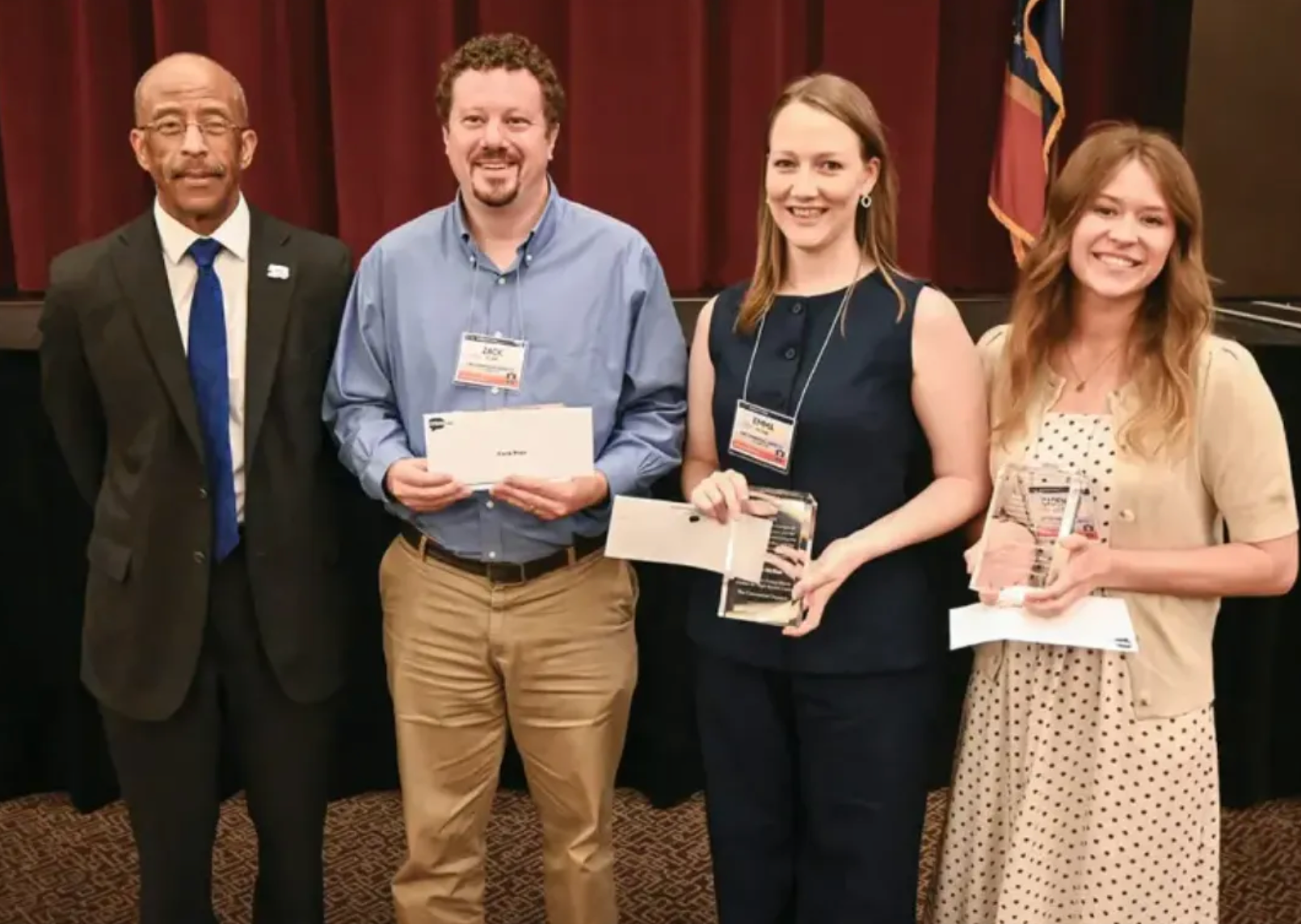
Eleven journalists in six newsrooms accepted the Center’s new $5,000 awards for impartial, objective and fair reporting
CFINR and YouGov logos with text, “The Center for Integrity in News Reporting” and “In partnership with”
June 8, 2026
June 10, 2026— Only two of eleven of the most well known national news organizations have a majority of Americans who have a great deal or fair amount of trust in them, according to a new survey conducted by YouGov for the Center for Integrity in News Reporting. However, the survey also found greater trust among these 11 national news organizations individually than estimates of public trust in the mass media in general. The survey also highlights a reason for the lack of trust, as only 12% on average say they have 'a great deal of trust' that these news outlets present facts without intentionally omitting important information that could change the meaning or context. It also suggests a possible way to increase trust, with the public saying only 13% of these news organizations on average always make a clear distinction between news and opinion. "For readers and viewers to trust news reporting, they need to understand what a news organization stands for. Adopting a concise statement of core journalistic values and making it transparent is a relatively inexpensive step that a number of news organizations have already taken and one that can help rebuild trust, transparency, and accountability," according to Rufus Friday, Executive Director of the Center for Integrity in News Reporting. The survey, conducted by YouGov between February 16 - 26, 2026, finds that Americans are about evenly divided in their preference for reporting that takes a more neutral approach (reporting the statements of public officials and others and let the news consumer decide what they believe to be the truth- 53% of American say this) and a more active style of reporting that tells news consumers about what news organizations consider the accuracy or inaccuracy of statements directly (47%). Share of Americans who say they prefer media that …
By David Sommers June 5, 2026
The Center for Integrity in News Reporting (CFINR) has named Terry Tang, executive editor of the Los Angeles Times, to its board of trustees . Tang was appointed executive editor of the Times in 2024, becoming the first woman to hold the top editorial post in the paper's 144-year history. She oversees both the newsroom and the opinion section of one of the country's largest daily newspapers. Her arrival on the CFINR board comes weeks after the Los Angeles Times received the Center's inaugural $25,000 Investigative Reporting award for "LA Firestorms: Uncovering How the Government Failed the Public" — a sustained investigation into the public-sector response to the January 2025 firestorms. The reporting team drew on dispatch logs, public records, witness accounts, radio traffic, and independent soil testing to establish a documented account of how governments at multiple levels prepared for, responded to, and recovered from the disaster. Among the investigation's findings: that the Los Angeles Fire Department chose not to deploy roughly 1,000 available firefighters and dozens of water-carrying engines despite hurricane-force wind warnings, a decision that contributed to the ouster of the LAFD chief; and that an independent Times-led soil-testing effort found hazardous heavy metals on properties FEMA had declined to retest, prompting the EPA to reverse course nearly a year after the fires. Before joining the Times in 2019, Tang held multiple editing roles at The New York Times, including deputy editorial page editor and opinion editor. Earlier in her career she was an editorial writer and columnist at the Seattle Times and a reporter at the Seattle Weekly. Tang holds a bachelor's degree in economics from Yale, a J.D. from NYU School of Law, and was a Nieman fellow at Harvard. "Terry Tang is exactly the kind of trustee CFINR needs," said Walter E. Hussman Jr., founder of the Center for Integrity in News Reporting. "She has spent her career at some of the most respected newsrooms in the country, and she uniquely understands what it takes to produce reporting that is impartial, objective, and fair. Having Terry on this board will strengthen everything we are focused on at the Center." CFINR was founded by Hussman, the chairman of WEHCO Media and a veteran newspaper publisher and media executive, to address what Gallup polling identifies as a measurable collapse in American public trust in mass media, which has fallen from roughly 70 percent in the 1970s to 28 percent today. The Center's annual awards program, which drew 397 entries from at least 35 states this year, recognizes reporting that is impartial, objective, and fair. Beginning in 2027, the program will be renamed the Benjamin Franklin Prize for Impartial, Objective News Reporting. More information about CFINR and its trustees is available at www.cfinr.org .
By David Sommers May 20, 2026
Six $25,000 prizes awarded across broadcast, cable television, digital, investigative, print, and White House Correspondents' Association reporting; New York Times columnist Thomas Friedman delivers keynote at Washington gala; awards to be renamed the Benjamin Franklin Prize for Impartial, Objective News Reporting in 2027
By David Sommers April 20, 2026
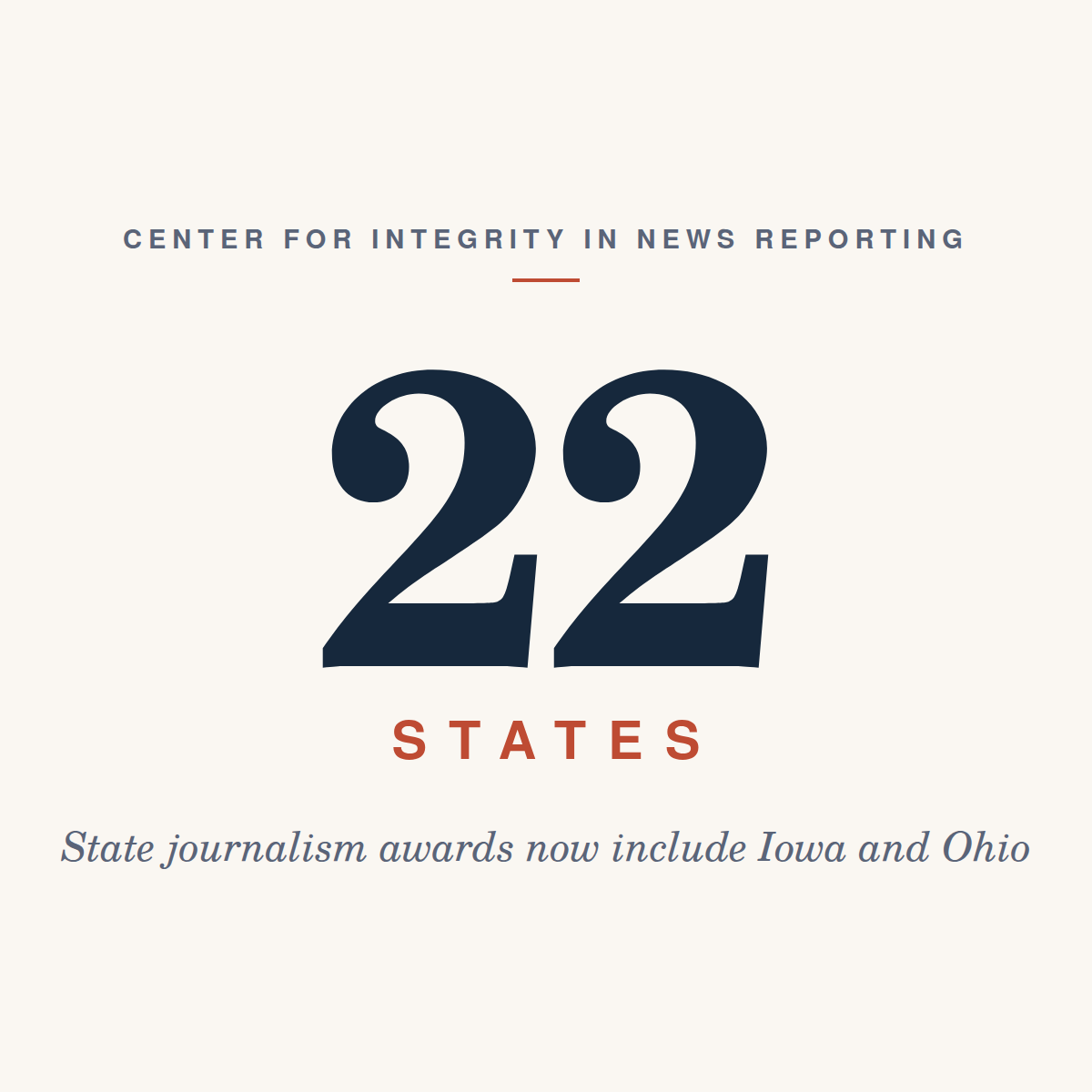
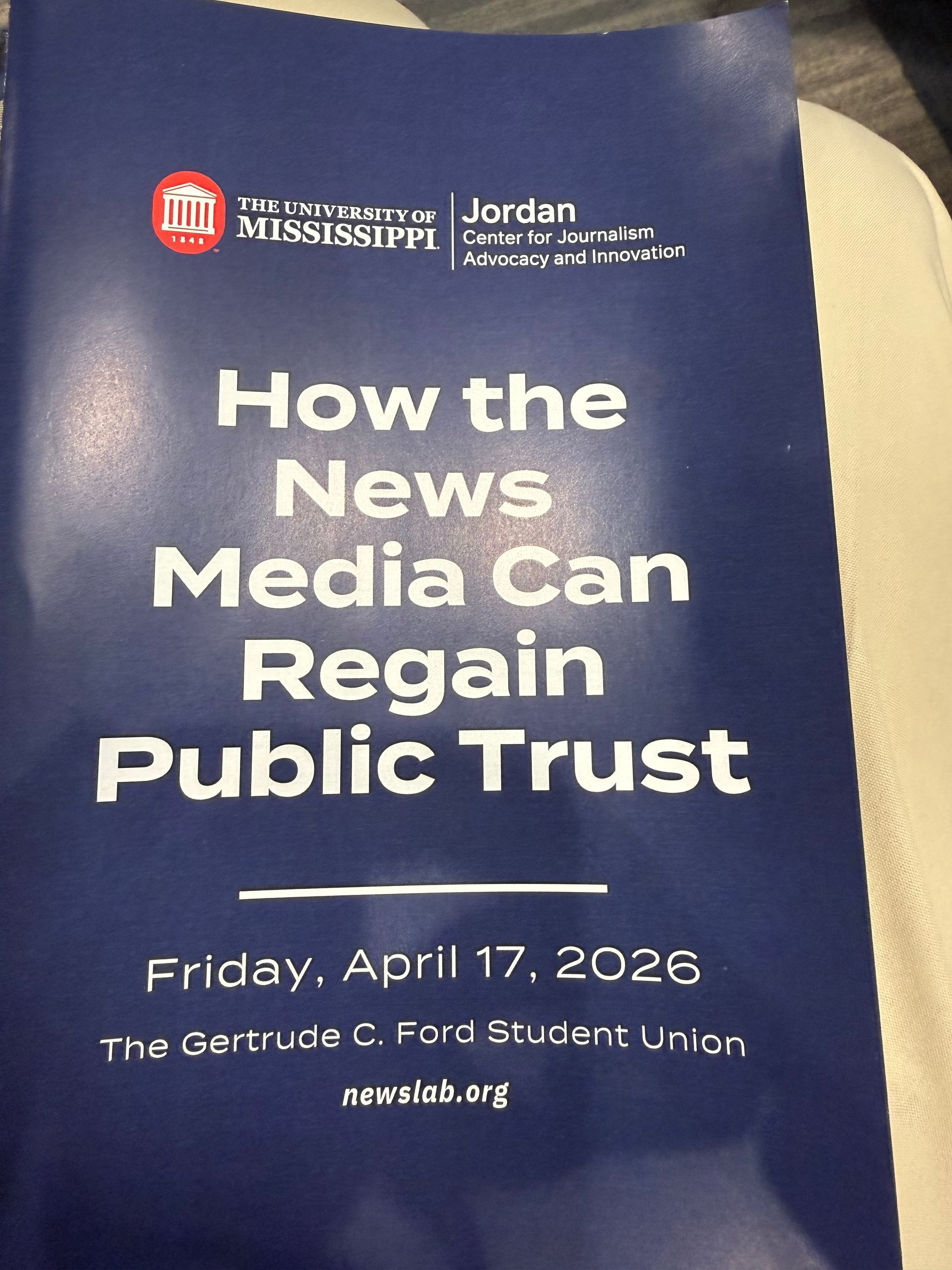
OXFORD, Miss. — Rufus Friday, executive director of the Center for Integrity in News Reporting, delivered a 45-minute address April 17 at the University of Mississippi calling on journalists, news organizations and journalism students to publicly commit to core journalistic values as the foundation for rebuilding public trust in the American press. Friday spoke before an audience of approximately 100 journalists, academics, civic leaders and students at the Jordan Center for Journalism Advocacy and Innovation's national symposium, "How the News Media Can Regain Public Trust," held on the Oxford campus. Walter E. Hussman Jr., the retired publisher of the Arkansas Democrat-Gazette and WEHCO Media, and founder of CFINR, attended the event in person and participated in the question-and-answer session that followed Friday's 45-minute address. The symposium brought together a range of national voices on the press trust crisis, including Brian Stelter, CNN's chief media analyst; Kathy Kiely, a veteran journalist and press freedom fellow; Vivian Walker, a practitioner in residence at Georgetown University; former U.S. Rep. Adam Kinzinger; former U.S. Rep. Joseph Kennedy III; and Ellen McCarthy, chairwoman and CEO of the Truth in Media Cooperative. The event was hosted by the Jordan Center and sponsored in part by CFINR. Friday’s address anchored its argument in polling data, citing Gallup's September 2025 survey showing that only 28 percent of Americans now express a great deal or fair amount of trust in the news media, down from 72 percent in 1976. He noted that for the first time since the annual poll began, complete distrust of the media, at 36 percent, outweighs any level of trust. "For the first time in the recorded history of this poll, complete distrust outweighs any trust," Friday said. "And it's worse here than anywhere else." He pointed to the Reuters Institute for the Study of Journalism's survey of 92,000 people across 46 countries, which ranked the United States last in media trust at 29 percent, and to a June 2025 Pew Research Center survey showing that trust in major national outlets breaks almost perfectly along partisan lines, with 58 percent of Democrats trusting CNN and 58 percent of Republicans distrusting it, and 56 percent of Republicans trusting Fox News while 64 percent of Democrats distrust it. "We have a mirror problem," Friday said. "Both sides see exactly the bias they expect to see, in exactly the outlets they already distrust." Friday identified four causes for the decline: the nature of bias perception and the algorithmic amplification of confirming content; the rise of 24-hour cable news and social media; shifts in journalism education and hiring practices; and what he described as a debate inside journalism education itself over the value of objectivity. He addressed that last point at length, acknowledging that some frustrations driving that debate were legitimate. False balance, inadequate coverage of underrepresented communities and the use of objectivity as a shield against difficult reporting were real failures, he said. But he argued those failures were reasons to live up to the standard, not abandon it. "The profession doesn't need to abandon the standard," Friday said. "It needs to live up to it." Friday devoted a portion of his remarks to the origin of CFINR and to Hussman, who was in the audience. He recounted how Hussman, watching a CNN promotional spot in 2017, heard a prominent anchor say she did not believe in the "false equivalency" of giving both sides of a story. Hussman responded by drafting a statement of journalistic values and running it consistently across all WEHCO Media newspapers. The largest share of the address was devoted to what Friday called CFINR's single most important programmatic priority: persuading news organizations to adopt and publicly display a statement of core journalistic values. He cited the Bangor Daily News as one example of a news organization that has done so, and described a mural unveiled at the Stars and Stripes news facility at Camp Humphreys in South Korea, the largest U.S. military installation overseas, bearing five words: Credibility. Impartiality. Truth-telling. Balance. Accountability. Friday serves as chair of the Stars and Stripes National Publisher Advisory Board. On CFINR's national awards program, Friday reported that entries to the organization's annual journalism competition have grown from 102 in the program's first year to 127 the following year to 397 in 2025, a 213 percent increase in a single year. The national prizes carry a cash award of $25,000 per category, more than the Pulitzer Prize. CFINR has also expanded its state-level awards program. A three-year, $210,000 grant from the Southern Newspaper Publishers Association Foundation funds $5,000 prizes across 14 southeastern states. A separate Stanton Foundation gift of $90,000 covers six New England states, and a recent additional gift adds Ohio, bringing the total to 21 states and $315,000 in grant funding. CFINR also works with 23 journalism school partners through an initiative which brings award-winning journalists into classrooms at schools including Northwestern University's Medill School of Journalism, USC's Annenberg School, and the University of Missouri, with more college and university partners constantly being added. Friday closed by speaking directly to the journalism students in the room, telling them the public had not given up on good journalism — only on what it perceived journalism had become. "Never compromise," he said. "Cover your community through objectivity and impartiality. It takes time to rebuild trust. One headline at a time. One correction at a time, done quickly and with humility. One fair story at a time." The symposium also featured a keynote luncheon address and fireside chat with Kinzinger; a session on investigative sports journalism with journalist Graeme Joffe; a panel on community versus audience in local journalism featuring Andre Natta of the Alabama Initiative for Independent Journalism, Louisiana Illuminator staff writer Wes Muller and Sarah Gamard of the Center for Community News; and a closing session on the international perspective with Clayton Weimers, executive director of Reporters Without Borders USA. The event concluded with the introduction of the 2026 Oxford Declaration on Journalistic Integrity and Public Trust, a framework developed collaboratively by symposium participants addressing transparency, algorithmic accountability, independence, attribution standards and the separation of news from opinion and commentary. David A. Sommers is the consulting communications director for the Center for Integrity in News Reporting.
By David Sommers April 19, 2026
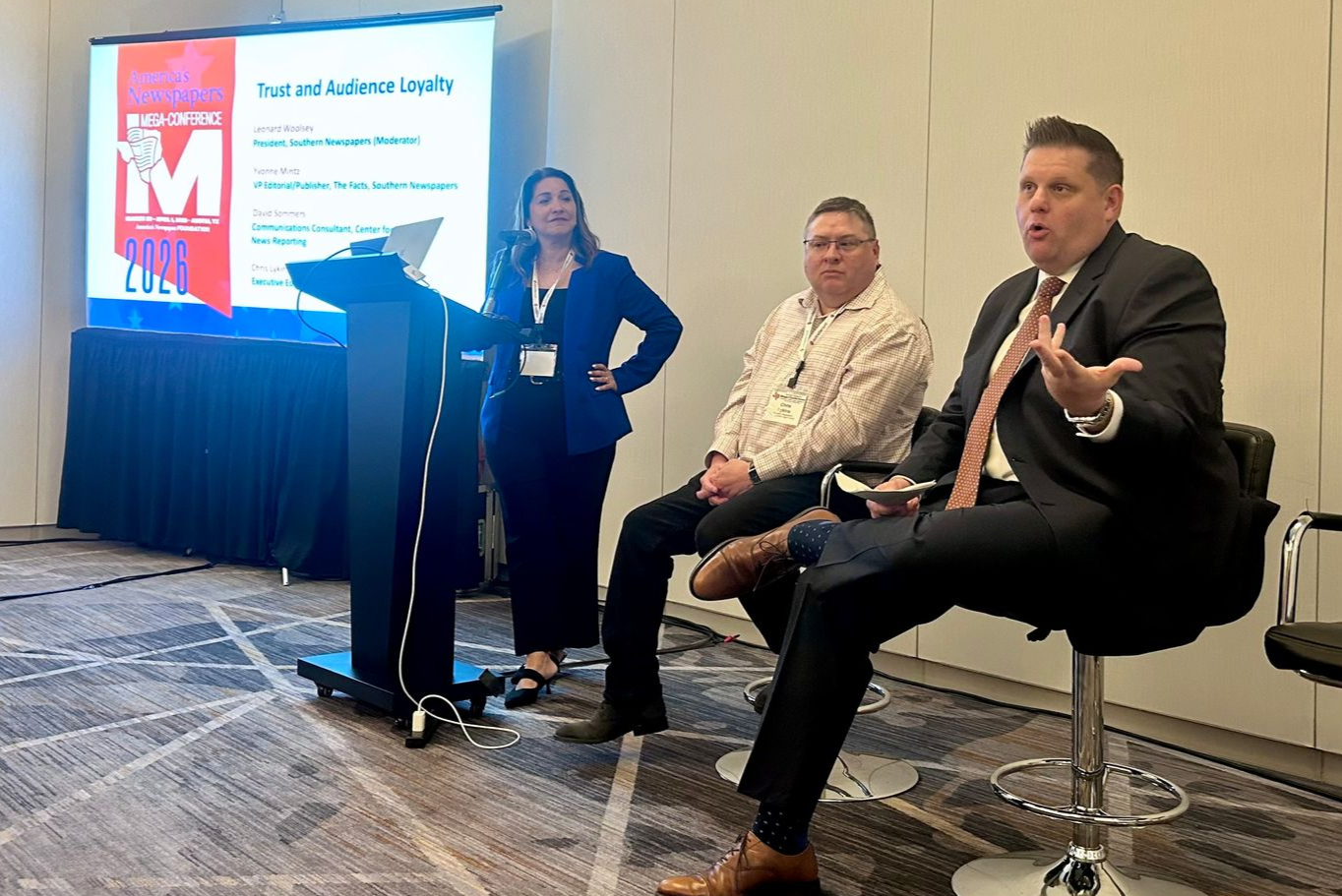
CFINR consulting communications director David A. Sommers addresses the "Trust and Audience Loyalty" panel at the America's Newspapers Mega-Conference in Austin, joined by Southern Newspapers executive editor Chris Lykins (center) and The Facts publisher Yvonne Mintz. AUSTIN — The America's Newspapers Mega-Conference draws publishers, editors and industry leaders from across the country, and this year it landed at a moment when the conversation about trust in local journalism is front and center in national discussions. I attended the conference representing the Center for Integrity in News Reporting, participating in a panel on trust and audience loyalty. What I heard from the room confirmed something CFINR has been advocating since its founding: the industry knows the problem, and there are concrete steps news organizations can take to address it with their audiences. The panel was introduced by Leonard Woolsey, president of Southern Newspapers; and panelists also included Yvonne Mintz, vice president of editorial and publisher of The Facts; and Chris Lykins, an editor with Southern Newspapers. Together they represented the kind of long-tenured, community-rooted news leadership that the trust conversation often centers on but rarely features directly. The discussion got substantive fast. One of the most thoughtful exchanges came from the executive director of a state press associations, pushing back on the methodology behind long-running, well-established national media trust surveys. The argument deserves consideration. When pollsters ask the public about "the media," the attendee said, they bundle local community journalism together with cable news and national conglomerates. The resulting trust numbers misrepresent what's actually happening at the local level. That state association's on polling shows trust in local news tracking significantly higher than trust in the media in the abstract. CFINR has cited Gallup's figures extensively — 28% trust nationally is a genuine crisis — but the' point reinforces why local news organizations have both reason for concern and reason for confidence. The problem is real. The opportunity is also real. I used the moment to note that CFINR is developing its own research to better capture that distinction, without getting into specifics. That landed with the room. The broader conference reflected what CFINR has been saying to press associations from Kentucky to Minnesota: this industry is not in retreat on the trust question. Dean Ridings, CEO of America's Newspapers, captured it well in his post-conference reflection, writing that while AI dominated many sessions, the enduring message was that "meaningful, trusted content matters. In a fractured media environment, it is a real advantage and one of the clearest ways local newspapers stand apart." That thoughtful sentiment aligned directly with what our panel explored. Trust is not a marketing message. It's foundational and essential, built through daily editorial decisions, impartiality and objectivity, institutional transparency and a willingness to state clearly what a newsroom stands for. That is precisely the work CFINR supports, helping news organizations develop and publish statements of core journalistic values, recognizing impartial reporting through national awards, and bringing that case directly to industry gatherings like Mega. The room at our session was at capacity, with roughly 75 people in attendance and strong questions that pushed the conversation past its scheduled time. That appetite reflects where the industry is. Publishers and editors are not avoiding the trust question. They are looking for frameworks, examples and reinforcement. CFINR's national awards program, which will present six prizes of $25,000 each at a gala in Washington, D.C., on May 19, is one tangible signal of that commitment. The awards recognize the kind of objective, impartial reporting that earns public confidence. Mega was a reminder that the work CFINR is doing connects with what journalists and organizational leaders are seeing in newsrooms across the country. The conversation in Austin will continue in newsrooms nationwide, and in the ongoing effort to make trust something the industry earns back, one decision at a time. David A. Sommers is the consulting communications director for the Center for Integrity in News Reporting.
March 8, 2026
By David Sommers Center for Integrity in News Reporting March 5, 2026 —The Center for Integrity in News Reporting’s (CFINR) National Journalism Awards attracted a record level of interest in their third year, with submitted entries up 213% from last year and up 289% from the program’s first year. Submissions in the 2025 annual awards cycle came from journalists and news organizations in at least 35 states, reflecting a broader national footprint for awards that recognize objective and impartial news reporting. The field also included entries from numerous national journalism organizations. A new Investigative Reporting award helped drive the increase, drawing nearly 100 entries in the first year of the new category. CFINR added the category to recognize in-depth, fact-based reporting that holds institutions accountable while adhering to impartial and objective newsgathering standards. Judges have begun reviewing submissions and winners will be announced at a national gala in Washington, D.C. , on May 19, 2026. Additional event details will be released in the weeks ahead. Now in their third year, the CFINR awards were created to highlight journalism that prioritizes objective and impartial news reporting, guided by the principle associated with publisher Adolph Ochs: “to give the news impartially, without fear or favor.” For the current awards cycle, CFINR will present six national prizes, each carrying a $25,000 cash award, for a total of $150,000. Categories include Broadcast, Cable, Digital, Investigative Reporting, Print, and reporting by members of the White House Correspondents’ Association. The contest is designed to be accessible and journalist-driven. There are no entry fees and no nomination process. Journalists and editors may submit work directly, and entries are evaluated as impartial and objective news reporting, not opinion, commentary or advocacy. Eligible work for this cycle included reporting published or aired between Jan. 1 and Dec. 31, 2025. “The growth in participation signals rising awareness among journalists and news organizations of an awards program focused specifically on objective, impartial news reporting — and a willingness to put that work forward for national recognition consideration,” said CFINR Executive Director Rufus Friday. David Sommers is the consulting communications director for the Center for Integrity in News Reporting
By David Sommers February 12, 2026
February 12, 2026 —Leaders of the Center for Integrity in News Reporting (CFINR) have spent the past several months delivering a consistent message to press associations across the country: trust in journalism has eroded, but it can be rebuilt through objectivity, transparency and discipline. Speaking to journalists, publishers and newsroom leaders at the Kentucky Press Association in Louisville, the Minnesota Newspaper Association in Minneapolis, the North Carolina Press Association in Cary, and the national Newspaper Association Managers conference in Washington D.C., CFINR Executive Director Rufus Friday outlined the organization’s growing national footprint and urged newsrooms to recommit to impartial reporting at a time of historic public skepticism. Additional speeches and visits have also included press associations in Tennessee, Mississippi and Arkansas. “Journalism still matters,” Friday told attendees at the Kentucky Press Association’s winter convention in January. “And journalism still needs every single one of you.” Across the four appearances, Friday emphasized that declining trust in the media is not anecdotal, but measurable. Citing long-term Gallup polling , he noted that public confidence in the news media has fallen to levels not seen in five decades, with just 28 percent of Americans expressing trust. “Trust in the media in America is at its lowest point in 50 years,” Friday said during his Minnesota address. “This is not just an opinion; it’s a reality backed by data.” Friday told press association leaders that trust has become polarized as well as diminished, with Americans increasingly divided over which outlets they consider credible. In that environment, he argued, objectivity and clarity are not abstract ideals but practical necessities. “In moments of tension, uncertainty and fear,” he said in Minnesota, “clear-headed, impartial reporting is not just a professional ideal. It’s a public service.” At all four stops, Friday framed the Center’s work as a response rooted in action rather than criticism. Founded in 2024, CFINR focuses on recognizing impartial and objective news reporting, strengthening state-level journalism awards, partnering with journalism schools and encouraging news organizations to publicly articulate their core journalistic values. “Our mission is simple, but it is not small,” Friday said in Kentucky. “To restore trust in journalism through fairness, objectivity and transparency.” A central focus of the speeches was the Center’s expanding awards program . CFINR now presents six national awards of $25,000 each for objective reporting across print, broadcast, cable, digital and investigative journalism, along with reporting by members of the White House Correspondents’ Association. Unlike many journalism contests, the awards have no entry fee and allow journalists to submit work directly. “These awards send one simple message,” Friday said. “Objective journalism still matters and we go all out in recognizing and rewarding these journalists for it.” The organization is also expanding state-level awards through partnerships with press associations. With support from the Southern Newspaper Publisher’s Association Foundation and the Stanton Foundation , CFINR will soon offer $5,000 awards for impartial reporting in nearly two dozen states, with the goal of eventually reaching all 50. Friday told national association managers that recognition matters most when it happens close to home. “Trust in media is built locally,” he said. “It is built in city halls, school board meetings and courtrooms.” Another recurring theme was transparency. Friday repeatedly urged news organizations to adopt and prominently display statements of core journalistic values , drawing a clear line between reporting and opinion. “When readers know what you stand for, they stop guessing — and start believing,” he said during the Kentucky luncheon. “Credibility is a newsroom’s greatest asset and impartiality is its strongest source of trust.” Throughout the speeches, Friday emphasized that rebuilding trust will not happen through a single initiative or message, but through sustained, everyday decisions inside newsrooms. “Trust isn’t rebuilt by one speech or one survey,” he said in Washington, D.C.. “It’s rebuilt one decision, one headline, one newsroom policy at a time.” Associations, universities, or organizations interested in inviting a CFINR speaker can contact Rufus Friday at rfriday@cfinr.org .
February 12, 2026
" Don’t blame rapacious owners for the loss of public trust. Blame biased, incompetent reporting. "
By Published in the Wall Street Journal- Jan. 29, 2026 February 6, 2026
"We need the facts more quickly, more soberly, in greater depth."