




CFINR National Journalism Awards entries draw record growth in third year

Honoring impartial and objective news reporting, annual entries are up 213% from last year

Read More

From the Newsroom to the Classroom: CFINR’s Campus Speaker Initiative Gains Momentum

Connecting award-winning journalists with college students to discuss objectivity, fairness, and the craft of trustworthy reporting

Read More

COLUMN: In Austin, trust in local news was more than a talking point

Notes from the America's Newspapers Mega-Conference, where the trust conversation got specific.

Read More

CFINR Takes Case for Objectivity and Trust to Press Associations Nationwide

Recent appearances in Kentucky, Minnesota, North Carolina and Washington D.C. underscore a consistent message: trust in journalism is rebuildable.

Read More

Bangor Daily News Adopts Core Values

Read More

Walter Hussman Jr. at the CFINR Awards 2025

Read More
Welcome TO

THE Center for integrity in news reporting

The Center for Integrity in News Reporting was created to address the public’s declining trust in news reporting. Gallup polls show that trust, which was around 70% in the 1970s, has now fallen to less than a third. CFINR aims to improve public trust by encouraging and rewarding impartial, objective, and fair journalism. By recognizing exemplary reporting, we hope to restore the standards that once earned widespread trust.

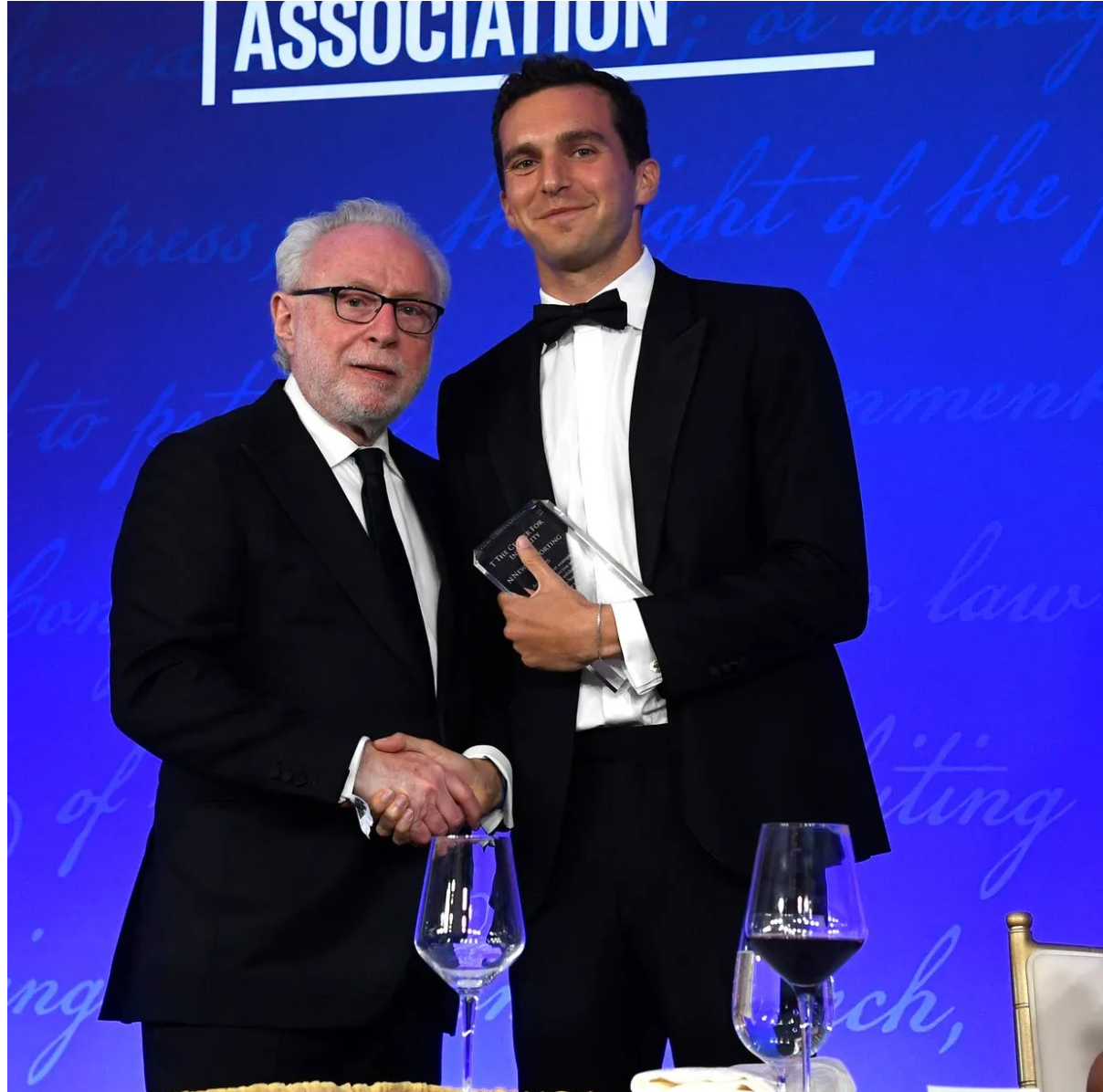
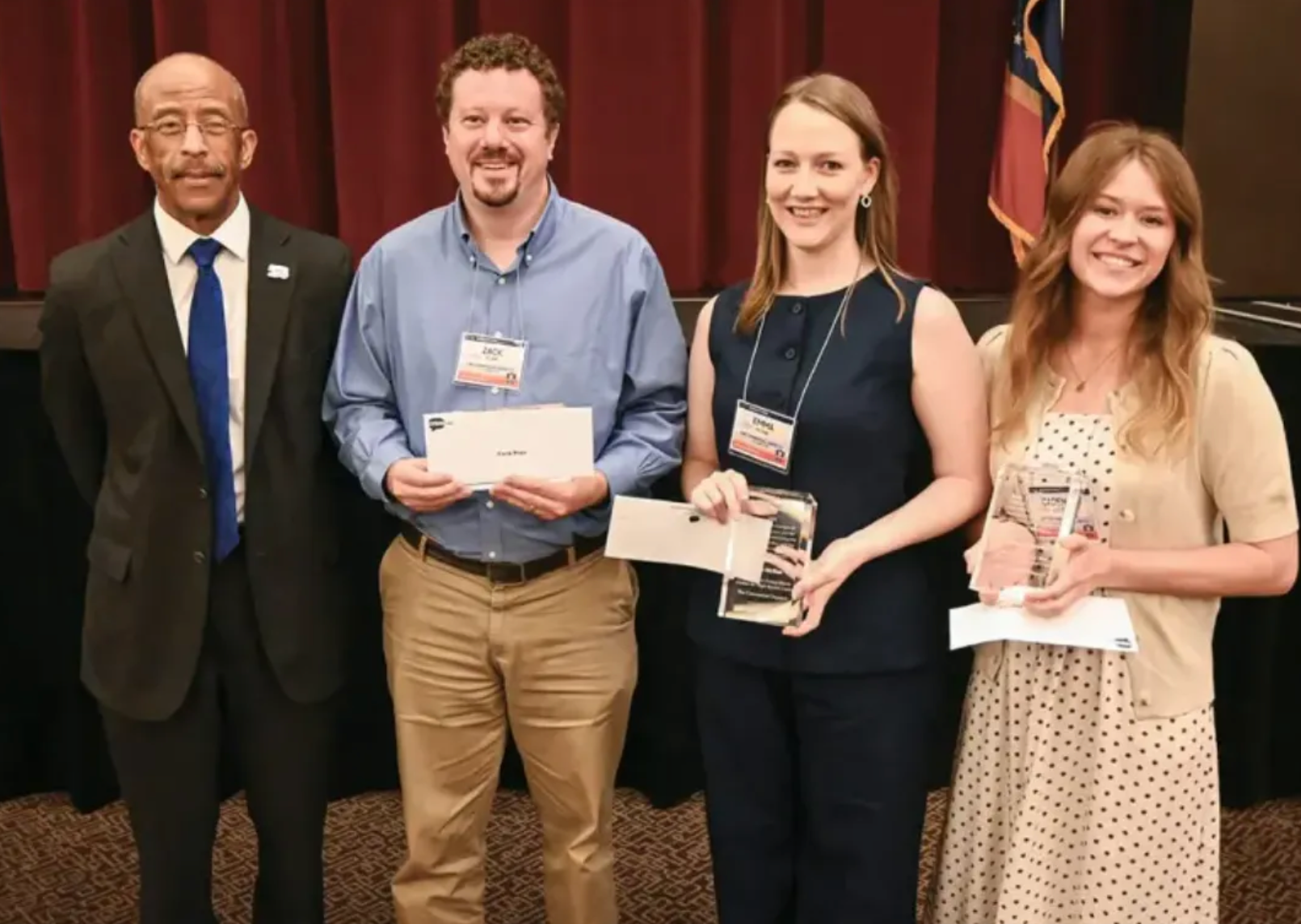
Three people are standing in front of a podium.

|

the numbers

public trust in news media

americans say they have No trust in mass media at all

A green 36 percent sign on a white background.

americans say they have Great Deal/Fair Amount of trust in mass media

The number 31 is written in green letters on a white background.
The number 18 is written in green letters on a white background.

the american Public's Confidence in Newspapers

A green 12 percent sign on a white background.

the american Public's Confidence in Television News

The number 68 is written in green letters on a white background.

Americans say they see too much bias in the reporting of news

Sources: Gallup- Knight Foundation & Gallup 2025 Poll

meet our

cfinr keynote speaker

Professor Jonathan Turley is a prominent legal scholar with over thirty academic articles published, is the keynote speaker for the 2025 CFINR Awards Ceremony. With a distinguished career, Turley brings a wealth of experience and insight to the event.

cfinr ANNUAL AWARDS

Honoring the best examples of impartial, objective, and fair news reporting in Print, Cable Television, and Digital Reporting.

A close up of a newspaper being printed on a machine

print reporting award

Recognizing excellence in print journalism that demonstrates impartiality, objectivity, and fairness. Along with a $25,000 prize.

A live breaking news background with a circle in the middle.

broadcast reporting award

In the 2025 award ceremony we will recognize outstanding broadcast reporting that upholds the highest standards of journalism. Along with a $25,000 prize.

A person is holding a remote control in front of a television.

cable television reporting award

Celebrating outstanding cable television reporting that upholds the highest standards of journalism. Along with a $25,000 prize.

A person is holding a cell phone with news on the screen.

digital reporting award

Honoring exceptional digital reporting that exemplifies fairness and objectivity. Along with a $25,000 prize.

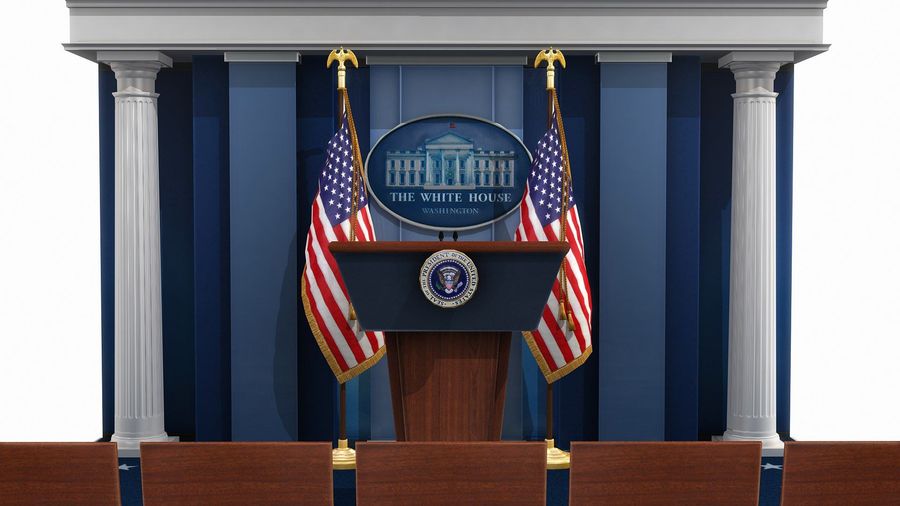
A podium with two american flags hanging from it in front of a white house.

White House Correspondents' Association Members award

In the 2025 award ceremony we will recognize outstanding White House Correspondents’ Association reporting that upholds the highest standards of journalism. Along with a $25,000 prize.

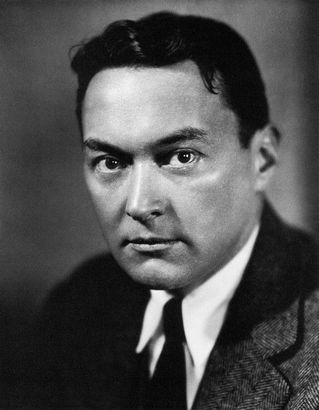
journalists should pursue "as impartial an investigation of the facts as humanly possible." Walter Lippmann, 1889-1974

A black and white photo of a man in a suit and tie

Credit: American Manhood in Black & White: Walter Lippmann, public intellectual, writer, reporter, and political commentator

2025 INAUGURAL AWARDS DINNER

WATCH NOW

WALTER E. HUSSMAN, JR OPENING REMARKS (0-6:28), rufus friday opening remarks (6:30-11:42), JONATHAN TURLEY'S KEYNOTE SPEECH (11:45-33:25), AWARDS PRESENTATION (34:18-44:45), ENDING MESSAGE (44:45-47:31)

CFINR LATEST NEWS & UPDATES

What's New

By David Sommers April 19, 2026
CFINR consulting communications director David A. Sommers addresses the "Trust and Audience Loyalty" panel at the America's Newspapers Mega-Conference in Austin, joined by Southern Newspapers executive editor Chris Lykins (center) and The Facts publisher Yvonne Mintz. AUSTIN — The America's Newspapers Mega-Conference draws publishers, editors and industry leaders from across the country, and this year it landed at a moment when the conversation about trust in local journalism is front and center in national discussions. I attended the conference representing the Center for Integrity in News Reporting, participating in a panel on trust and audience loyalty. What I heard from the room confirmed something CFINR has been advocating since its founding: the industry knows the problem, and there are concrete steps news organizations can take to address it with their audiences. The panel was introduced by Leonard Woolsey, president of Southern Newspapers; and panelists also included Yvonne Mintz, vice president of editorial and publisher of The Facts; and Chris Lykins, an editor with Southern Newspapers. Together they represented the kind of long-tenured, community-rooted news leadership that the trust conversation often centers on but rarely features directly. The discussion got substantive fast. One of the most thoughtful exchanges came from the executive director of a state press associations, pushing back on the methodology behind long-running, well-established national media trust surveys. The argument deserves consideration. When pollsters ask the public about "the media," the attendee said, they bundle local community journalism together with cable news and national conglomerates. The resulting trust numbers misrepresent what's actually happening at the local level. That state association's on polling shows trust in local news tracking significantly higher than trust in the media in the abstract. CFINR has cited Gallup's figures extensively — 28% trust nationally is a genuine crisis — but the' point reinforces why local news organizations have both reason for concern and reason for confidence. The problem is real. The opportunity is also real. I used the moment to note that CFINR is developing its own research to better capture that distinction, without getting into specifics. That landed with the room. The broader conference reflected what CFINR has been saying to press associations from Kentucky to Minnesota: this industry is not in retreat on the trust question. Dean Ridings, CEO of America's Newspapers, captured it well in his post-conference reflection, writing that while AI dominated many sessions, the enduring message was that "meaningful, trusted content matters. In a fractured media environment, it is a real advantage and one of the clearest ways local newspapers stand apart." That thoughtful sentiment aligned directly with what our panel explored. Trust is not a marketing message. It's foundational and essential, built through daily editorial decisions, impartiality and objectivity, institutional transparency and a willingness to state clearly what a newsroom stands for. That is precisely the work CFINR supports, helping news organizations develop and publish statements of core journalistic values, recognizing impartial reporting through national awards, and bringing that case directly to industry gatherings like Mega. The room at our session was at capacity, with roughly 75 people in attendance and strong questions that pushed the conversation past its scheduled time. That appetite reflects where the industry is. Publishers and editors are not avoiding the trust question. They are looking for frameworks, examples and reinforcement. CFINR's national awards program, which will present six prizes of $25,000 each at a gala in Washington, D.C., on May 19, is one tangible signal of that commitment. The awards recognize the kind of objective, impartial reporting that earns public confidence. Mega was a reminder that the work CFINR is doing connects with what journalists and organizational leaders are seeing in newsrooms across the country. The conversation in Austin will continue in newsrooms nationwide, and in the ongoing effort to make trust something the industry earns back, one decision at a time. David A. Sommers is the consulting communications director for the Center for Integrity in News Reporting.
March 8, 2026
By David Sommers Center for Integrity in News Reporting March 5, 2026 —The Center for Integrity in News Reporting’s (CFINR) National Journalism Awards attracted a record level of interest in their third year, with submitted entries up 213% from last year and up 289% from the program’s first year. Submissions in the 2025 annual awards cycle came from journalists and news organizations in at least 35 states, reflecting a broader national footprint for awards that recognize objective and impartial news reporting. The field also included entries from numerous national journalism organizations. A new Investigative Reporting award helped drive the increase, drawing nearly 100 entries in the first year of the new category. CFINR added the category to recognize in-depth, fact-based reporting that holds institutions accountable while adhering to impartial and objective newsgathering standards. Judges have begun reviewing submissions and winners will be announced at a national gala in Washington, D.C. , on May 19, 2026. Additional event details will be released in the weeks ahead. Now in their third year, the CFINR awards were created to highlight journalism that prioritizes objective and impartial news reporting, guided by the principle associated with publisher Adolph Ochs: “to give the news impartially, without fear or favor.” For the current awards cycle, CFINR will present six national prizes, each carrying a $25,000 cash award, for a total of $150,000. Categories include Broadcast, Cable, Digital, Investigative Reporting, Print, and reporting by members of the White House Correspondents’ Association. The contest is designed to be accessible and journalist-driven. There are no entry fees and no nomination process. Journalists and editors may submit work directly, and entries are evaluated as impartial and objective news reporting, not opinion, commentary or advocacy. Eligible work for this cycle included reporting published or aired between Jan. 1 and Dec. 31, 2025. “The growth in participation signals rising awareness among journalists and news organizations of an awards program focused specifically on objective, impartial news reporting — and a willingness to put that work forward for national recognition consideration,” said CFINR Executive Director Rufus Friday. David Sommers is the consulting communications director for the Center for Integrity in News Reporting
By David Sommers February 12, 2026
February 12, 2026 —Leaders of the Center for Integrity in News Reporting (CFINR) have spent the past several months delivering a consistent message to press associations across the country: trust in journalism has eroded, but it can be rebuilt through objectivity, transparency and discipline. Speaking to journalists, publishers and newsroom leaders at the Kentucky Press Association in Louisville, the Minnesota Newspaper Association in Minneapolis, the North Carolina Press Association in Cary, and the national Newspaper Association Managers conference in Washington D.C., CFINR Executive Director Rufus Friday outlined the organization’s growing national footprint and urged newsrooms to recommit to impartial reporting at a time of historic public skepticism. Additional speeches and visits have also included press associations in Tennessee, Mississippi and Arkansas. “Journalism still matters,” Friday told attendees at the Kentucky Press Association’s winter convention in January. “And journalism still needs every single one of you.” Across the four appearances, Friday emphasized that declining trust in the media is not anecdotal, but measurable. Citing long-term Gallup polling , he noted that public confidence in the news media has fallen to levels not seen in five decades, with just 28 percent of Americans expressing trust. “Trust in the media in America is at its lowest point in 50 years,” Friday said during his Minnesota address. “This is not just an opinion; it’s a reality backed by data.” Friday told press association leaders that trust has become polarized as well as diminished, with Americans increasingly divided over which outlets they consider credible. In that environment, he argued, objectivity and clarity are not abstract ideals but practical necessities. “In moments of tension, uncertainty and fear,” he said in Minnesota, “clear-headed, impartial reporting is not just a professional ideal. It’s a public service.” At all four stops, Friday framed the Center’s work as a response rooted in action rather than criticism. Founded in 2024, CFINR focuses on recognizing impartial and objective news reporting, strengthening state-level journalism awards, partnering with journalism schools and encouraging news organizations to publicly articulate their core journalistic values. “Our mission is simple, but it is not small,” Friday said in Kentucky. “To restore trust in journalism through fairness, objectivity and transparency.” A central focus of the speeches was the Center’s expanding awards program . CFINR now presents six national awards of $25,000 each for objective reporting across print, broadcast, cable, digital and investigative journalism, along with reporting by members of the White House Correspondents’ Association. Unlike many journalism contests, the awards have no entry fee and allow journalists to submit work directly. “These awards send one simple message,” Friday said. “Objective journalism still matters and we go all out in recognizing and rewarding these journalists for it.” The organization is also expanding state-level awards through partnerships with press associations. With support from the Southern Newspaper Publisher’s Association Foundation and the Stanton Foundation , CFINR will soon offer $5,000 awards for impartial reporting in nearly two dozen states, with the goal of eventually reaching all 50. Friday told national association managers that recognition matters most when it happens close to home. “Trust in media is built locally,” he said. “It is built in city halls, school board meetings and courtrooms.” Another recurring theme was transparency. Friday repeatedly urged news organizations to adopt and prominently display statements of core journalistic values , drawing a clear line between reporting and opinion. “When readers know what you stand for, they stop guessing — and start believing,” he said during the Kentucky luncheon. “Credibility is a newsroom’s greatest asset and impartiality is its strongest source of trust.” Throughout the speeches, Friday emphasized that rebuilding trust will not happen through a single initiative or message, but through sustained, everyday decisions inside newsrooms. “Trust isn’t rebuilt by one speech or one survey,” he said in Washington, D.C.. “It’s rebuilt one decision, one headline, one newsroom policy at a time.” Associations, universities, or organizations interested in inviting a CFINR speaker can contact Rufus Friday at rfriday@cfinr.org .
Show More